The Hero’s Journey

In English, we are learning about The Hero’s Journey. This is a layout of the plotline of most stories about heroes, such as The Hunger Games, Star Wars, The Matrix etc. Our task was to fill out the journey layout with the plotline of a story about a hero. The Hero’s Journey was extracted from Joseph Campbell’s work, The Hero with a Thousand Faces (1949).  I chose ‘The Phantom Tollbooth’ written by Norton Juster. After a review of The Hero’s Journey, I found it fascinating that it fitted in very well with the story and many other stories!

Apart from fitting in with works of fiction, The Hero’s Journey is also a representation of the many lives of the people in this world. It is a repeating cycle and some cycles might be slightly different than that of others, but they typically follow this outline:

  1. Ordinary world.
  2. Call to adventure
  3. Refusal of the call
  4. Meeting with the mentor
  5. Crossing the first threshold
  6. Tests, allies and enemies
  7. Approach
  8. Ordeal
  9. Reward
  10. The road back
  11. Resurrection of the hero
  12. Return with the elixir

If you’d like to dive deeper into what The Hero’s Journey is, I have put a link to the Youtube video our class used. If you have any thoughts on this post, feel free to tell me in the comments!

Quick 3 minute video: https://www.youtube.com/watch?v=d1Zxt28ff-E

More thorough 10 minute video: youtube.com/watch?v=6eNun-x_s2Y&feature=youtu.be
Character – Perseverance and Resilience 10HUMws

In our Yr 10 Humanities Class ‘All the World’s a stage’, we are self-assessing our ability to persevere and keep going through challenges in our class. This is the marking rubric we base our ability on:

Limited Evidence Emerging  Developing  Accelerating Proficient
I usually give up when things get tough.

I skip parts of my work if it looks too hard or I don’t know what to do.

I give up  or react badly when I get negative feedback.

I’m starting to keep going when things are hard, but I need encouragement.

If I get stuck, I ask for help from my peers or my teacher.

I am beginning to understand that challenges help me grow as a learner.

I’m learning to not give up even when tasks are difficult. 

I can solve some problems on my own. 

I can handle small or medium challenges by thinking about them.

I never give up, even on the hardest tasks. 

When I face big challenges, I think about what happened, adjust, and find solutions. 

I understand why perseverance and resilience are important. 

I work through any challenge I face and help others do the same. 

I make sure I seek out feedback to help my learning. 

I know that being resilient is essential in  life.

I have bolded the area that I think I am at, which is around Accelerating. This is because in this class, I have worked through the Research Inquiry Process assessment and have asked for lots of feedback from the teachers during the process, as well as not giving up when things are difficult and confusing. I have pushed myself to create a mini-project and presented it to the class, which I will share below.

When we were reading ‘Cue for Treason’, I made sure I filled in all of the slides for the book and finished the book, as well as closely paying attention to the language features and content of how the author writes the book. I linked the book to my other learning and used the novel for my Lvl 1 Studied Text external. When it was hard, I kept going to find the quotes I needed because I understand that the quotes are vital for my essay.

For Term 4, I actively seek out opportunities to read aloud roles in A Midsummer’s Night’s Dream and completed my Shakespeare background notes (although I did miss some classes due to derived grade exams). I have completed the MSND project that is due today. Ruby, Aimee and I made a children’s book which we will share in future posts.

For further improvement, I think I could complete more EP and manage my time to complete it, as I had exams. It would teach me to manage my time and it is helpful to learn more about Shakespeare.

My mini research enquiry project.

Thanks for viewing and reading this post. Any thoughts, comments or feedback, tell me in the comments!


A Midsummer Night’s Dream – Acts I – III

Our goal this week in 10HUMws was to continue to read the play, A Midsummer Night’s Dream as a class and to become familiar with Shakespeare’s language and the story of the play.  We are also trying to visualize the play as we read the play script directions.

In class, we have got up to Act 3 Scene two. Hermia and Lysander ran away and they slept under a tree. Because they are not married, they sleep far away from each other. At the same time, the fairy King Oberon is having an argument with the fairy Queen Titania and she flew away from him. Angry, he ordered Puck to give her eye drops that make her fall in love with the first person she sees. Titania woke up and the first person she saw was Bottom, the tradies actor whose head Puck turned into a donkey, and fell in love with him.

I played the part of Titania and quite enjoyed my part, popping in here and there. Everyone read in their own style and pace but we have not got to the point that people are confident enough to stand up while they read, and I hope by next week that we are confident enough to. I want to get better at reading the words fluently and ‘act’ out the words.

I am quite ready to stand and read aloud. I think this helps people be more confident and believe in themselves, as well as easily identifying the reader so that the play can go smoothly.

To help our class enjoy this more, I think we should have people standing up to act for a short while. They don’t have to be good, but standing up with other people helps them be confident as you don’t want to act alone while everyone else sits there and looks at you. I’d imagine it would be quite fun to do this, but this is just my idea. Maybe include a few simple props as well, like crowns, swords, wings etc (although some people might be silly with them).

Thank you for reading my blog. Feel free to comment on any thoughts you have. I will leave a comment on Braeden‘s blog and Harrison‘s blog, so check theirs out too!

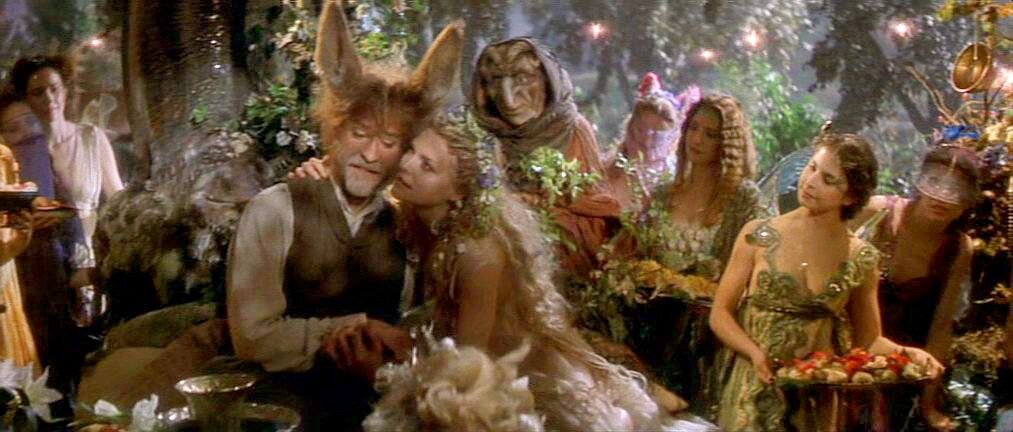
A scene from the Midsummer’s Night’s Dream movie:

ShakespearesPlaylist: A Midsummer Night's Dream — Rachael Dickzen

Source: racheldickzen.com


My first foray into a Shakespearean Play!

Our goal this week in 10HUMws (Year 10 Humanities All the world’s a stage) was to learn more about Shakespeare’s play structure, make connections with our novel, A Cue For Treason, and have an introduction to the plot lines in A Midsummer Night’s Dream by Shakespeare.

We started this topic by reading the novel Cue for Treason by Geoffrey Trease, in which Shakespeare was a character in the story and was told with a nice viewpoint. We then read some background information about Elizabethan England and around the time that the story was set in.  We didn’t read Midsummer Night’s Dream straight away but the children’s version instead, so that everyone gets the idea of the plotline as some said Shakespeare can be quite hard to read.

After Ms Lees read to the class the whole children’s version, we move on to reading the actual play. We started with act one, and shared out the roles for Act 1. I was Hippolyta (I had only a few lines at the start of the act) and found that reading in this way made it much more interesting. Some of my classmates stumbled on a few lines and giggled at the funny words, but we managed to get through Act 1 quite quickly. There were lots of new vocabulary and phrases we learnt as we went along, such as ‘I wooed thee’ means ‘I tried to win you’, reknownèd meaning well-known and the interesting French accents which suggested how the upper class of England used to speak.

My next goals for this topic is to speak more, like trying different roles that have a bigger part. I also see a lot of my classmates reading out boringly or giggling and falling out of character, so I will try to not do that. I am looking forward to the next 10HUMws class to see what happens next in the story. A link to our class’ daily planner is here, where you can check out what we are doing.

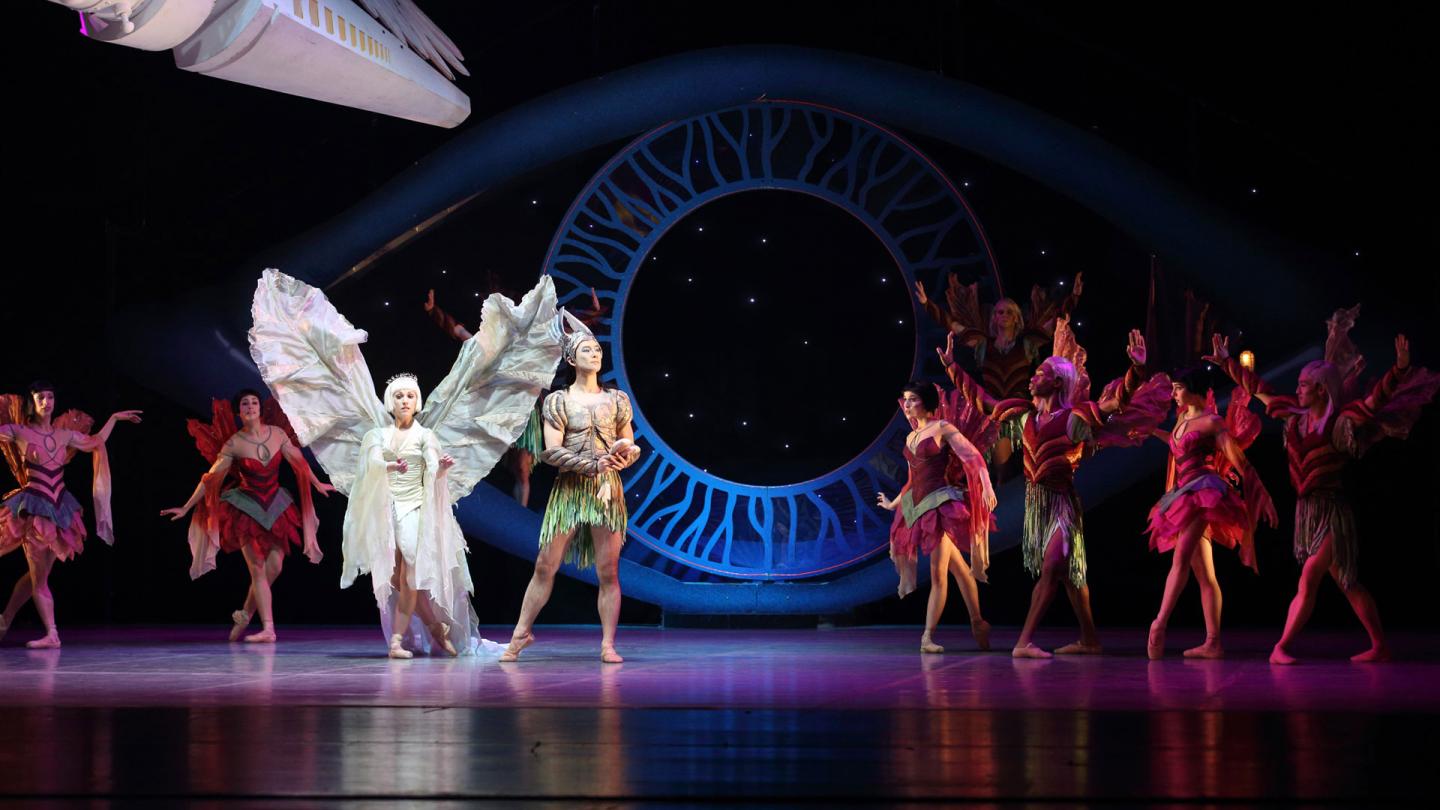
A Midsummer Night's Dream | Northern Ballet

A scene in MSND with the fairies, Northern Ballet.

Thank you for reading, and let me know what your thoughts on this post are in the comments!


Performance in music

For this semester, I have picked Creating Music as one of my options. Our goal was to learn a music piece and then to share it with the class. We got 5 lessons to learn the piece, and then performed in front of the class. My group was Kareariki (guitar), Braeden (drums), Bella (bass) and I (vocals). We chose the song ‘Come as you are’ by Nirvana to play.

The best part of this was: learning to play and trying out the role of singing, as I don’t normally sing in performances but play the keyboard instead. It was a bit scary to get out of my comfort zone, but it was great to try out something new. Kareariki also taught me the riff part of the song on guitar, which was very fun to learn and play.

The most challenging part of this was: I think the hardest part of this was to coordinate together and for me to sing loud enough. Kurt’s voice was a strong voice, which was difficult to sing with the song as I am not used to doing vocals.

When doing a task like this again I would: I would try out a different role because I’d like to play different instruments, and I will try to play more of the song.

This was a fun activity, and it helped me to understand my classmate’s abilities on music and the type of music they liked/preferred.

Thank you for reading.

The Wave reading activity

This term, my Humanities class is reading a novel called ‘The Wave’ by Morton Rhue (real name Todd Strasser).

When does belonging to a group help us, and when does it hurt us?  Belonging to a group will help us if if it is benefitting us physically, mentally or spiritually or to benefit others. Examples are a sports team, a study group or an environmental organization. These are organizations that will help us grow in those fields. Belonging to a group that hurts you means that the group is making a drawback in your growth or it is hurting others. Examples are belonging to a friend group that pressures you to vape/smoke or do bad activities.

How do we keep our own identity and values, especially when the group is powerful? Connect your ideas to *The Wave*, your own experiences, and something happening in Aotearoa right now. You can try to convince them using facts and logic that you do not wish to join or engage in activities that the group will carry out (if you don’t like what the group is doing). When the group is powerful, you can ask someone that doesn’t belong to the group to help you, like a trusted adult or a teacher. For example, Laurie Saunders (a character in The Wave), used help from the school’s newspaper (The Grapevine) to spread her word about The Wave.

For my own experiences and something that are happening in Aotearoa, I would say racial differences. As a Southeast Asian, I have faced racism when I first came here. The issue is not that bad now, but there would still be snarky comments from now and then. I think there are people in Aotearoa that face racism as a difficult issue.

Thank you for reading.


Weekly learning reflection: Week 1 Term 2

Welcome to my weekly learning reflection. Here’s what I’ve been up to in Humanities this week:

1. What have I achieved or learned since my last post? I have learnt about the story of Frankenstein and the author of the story.  I have done the activities that came with the reading of Frankenstein. I have also done the 20 minutes module on Writer’s Toolbox. I’ve read more of my book and I’m working on this blog post.
2. How well did I use my time this week? I’ve tried my best to use my time wisely and get tasks done.
3. Glows: What is going well? I am up to date with the work from Humanities.
4. Grows: What do I need to work on?  I need to work on reading more Philosophy works and Writer Toolbox modules.
5. Where could I get help with this? I could do this in my own time or ask my teachers.
6. What are my next steps? Getting more things completed.

Thank you for reading.

The cave story

How might Plato’s cave relate to how we get political information today? News sources or social media are what we get our political information from. Most people trust their sources and will believe anything that it says, similar to the prisoners looking at the shadows of the paper cut outs and believing that it’s what the real world is.

What “shadows” might citizens see instead of reality in a democracy? Promises that the leaders of democracy make. Things that will change but in reality they wouldn’t or become even worse. They can bribe news sources or social media influencers to say what they want. For example, Elon Musk supports Trump so the X platform shows things that promote Trump.

Who are the modern “puppeteers” controlling what information we see? Leader/s, influencers, news sources.

How can we break free from our “chains” to become better citizens? Get information from lots of different sources. Listen from different viewpoints apart from just one. Analyzing your information and don’t fully place your trust in one thing.

Would Plato think our democracy works well? Why or why not? I don’t really know because I haven’t read that much of Plato’s stories and his viewpoints of a just government. We do have a few problems with our economy mainly and there are people in our democracy that are still acting unjustly. Our democracy still allows people to have their say and are good at a few things so I think it depends.

Noble lies in society

What happens when a city stops believing in its founding stories? A city’s founding stories are the origins of what makes them who they are and what makes them unique compared to other places. This also includes their beliefs and what values they follow. When a city stops believing in its founding stories it starts to fall apart and lose its place. It has no origin or myths or beliefs that hold the people together.

Does Plato’s perfect city allow people to truly grow and be happy? I think Plato’s city has a hierarchy system, and it restrains its people to extend themselves and move up from their current class because they are set one. ‘When iron or copper becomes its ruler, the city shall perish’. If an offspring of iron or copper wants to stretch itself and move up from its current class, it is forbidden. The city has other benefits such as ‘see everyone as your own brother’ and ‘advise her for good, and defend her against attacks’. This brings the city together as a society.

How does the Cave story connect to the Noble Lie idea? The cave story is about a prisoner managing to escape and realize what outside the cave is like. His fellow prisoners who didn’t escape didn’t believe his telling and gathered together to beat him up. The Noble Lie is a lie, which is different from the prisoner’s truth because he was only telling them about what he saw. It is connected in a way that a person wants to tell a population something so that they can expand their view and beliefs.

What modern ‘noble lies’ might exist in our society today? Noble lies that exist from today’s society are things like ‘Santa Claus’ and ‘The tooth fairy’ as well as some religions (things that are too superstitious). They are for the parents’ benefit to get their children doing what they want, but they have to appeal to their children so that they will want to believe it.

How can we balance staying together as a society with personal freedom and truth? I think to balance this, we can tell them about the city’s founding stories. They have a choice to believe it or not. The city’s founding stories aren’t to be manipulative and shape the society according to the ruler’s view, but to inform citizens about how the city existed and what made it become what it is now.

Glaucon vs Socrates and other viewpoints

Glaucon vs Socrates: Glaucon disagrees with Socrates and says that justice and virtue are not desirable for the human nature. He says that humans only act right and just because they lack the power to do otherwise. Glaucon proposes the story ‘Ring of Gyges’ as his argument. Glaucon’s argument suggests that humans will act unjustly to benefit themselves when they have the power.

Unmasking morality: Are people only good when others are watching? Yes, but this depends on some people. People thinks a lot about what others think about them, so they try to keep their public image by doing the right things—most of the time. Some people find themselves doing bad things even when others are watching, but this ‘others’ are people that they know like their friends or partners in crime. People that act justly when others are watching and then act wrongly when there are no eyes upon them are common in society. They can tell others to do then right thing and then behind their backs do the opposite of what they said. Hypocrites. But what about people that act right when others are watching and also act right when others aren’t watching? They are taught to do so, by members of society, and they listened and do what they think is right, for they have recognized that there are no long-term benefits of being unjustly and will face consequences sooner or later. This character, I think, is rare.

Modern relevance: Is the story ‘The Ring of Gyges’ still relevant in today’s society? Even though this story is written a long time ago, I think it is still relevant in today’s society in some way in terms of politics. Someone has lots of power, they will do bad things and make up things that sound good when they are going to do the exact opposite.

Challenge: If you were in a position of power, how would you ensure that you act with integrity even when no one is watching? I would do that by always mentally reminding me that doing bad things always have consequences. Doing good things that benefit others have lots of benefits in the long term run and I’ll list those benefits down and remind myself that it has good rewards.

Thank you for reading.